
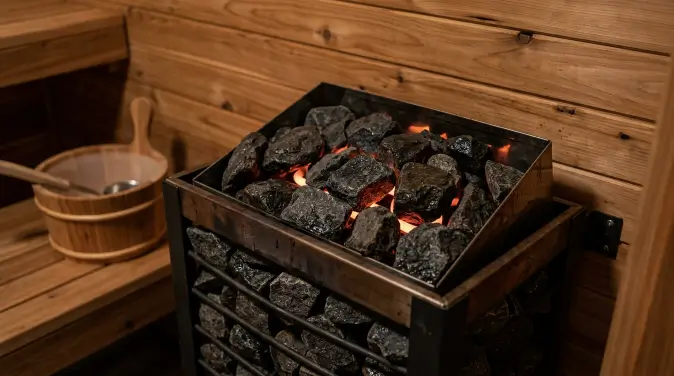
What to Look for When Buying a Sauna Heater in 2026 on a Budget

A budget-conscious sauna heater purchase in 2026 means prioritizing correct kilowatt sizing for your room, a heater with at least a two-year element warranty, and genuine sauna stones over extras like app controls or built-in speakers, which add cost without improving how the sauna actually performs. A basic 3 to 4.5 kW mechanical-control heater plus a simple electrical run typically lands a first build in the $1,200 to $2,000 range all in.
The Scenario: Converting an Unused Basement Corner
Consider a homeowner turning an 80 square foot basement corner into a first home sauna, with roughly $2,000 total to spend across the heater, the room build, and electrical work. This is a common starting point, and it forces real trade-off decisions rather than an unlimited shopping list, which is exactly the situation most first-time buyers are actually in. The heater choice matters more here than in a bigger-budget build, since there is less room to absorb an oversized or mis-specified unit.
Step One: Get the Kilowatt Sizing Right Before Anything Else
For a small basement corner build, cubic footage usually lands in the 80 to 120 range once framing and cedar paneling are in, which points toward a 3 to 3.6 kW heater on a standard 20 or 30 amp 240V circuit rather than a larger 6 kW unit that would need a bigger, more expensive electrical run. Buying a heater one size too big does not just waste money on the unit itself, it also pushes the electrical work into a higher-amperage, higher-cost category. This is the single decision that has the biggest ripple effect on the rest of the budget.
Step Two: Mechanical Controls Over Digital, for Now
A heater with simple mechanical dial controls typically costs $50 to $150 less than a comparable digital model and has fewer electronic parts that can fail down the road. Digital controls add real conveniences, like scheduling a preheat before you get home, but they are not required for the heater to reach and hold temperature correctly. For a tight first budget, mechanical controls are a sensible place to save without giving up anything that affects the actual sauna experience.
Step Three: Do Not Cut Corners on Stones or Wire Gauge
Genuine basalt or peridotite sauna stones and correctly sized wire for your circuit length are two places a tight budget should not try to save further. Off-brand or landscaping stone can crack or pop when heated, and undersized wire for a long circuit run is both a fire risk and a mistake that is expensive to correct once walls are closed up. These are the two line items in a budget build most likely to cause real problems later if shortcuts are taken here to save fifty or a hundred dollars now.
Step Four: New vs. Used Heaters
A used heater can look like an obvious way to save money, sometimes half the price of new, but it comes without a warranty, and you have no way to verify how the element was used or whether it was ever run without proper clearance. For a first sauna heater purchase specifically, a new entry-level unit with at least a two-year warranty on the element is generally the safer budget move, since a failed used element with no warranty coverage can end up costing more in the long run than the initial savings.
Step Five: Compare a Few Heaters Before Committing
Once you have a kilowatt target and a rough budget split between the heater, electrical work, and room materials, it is worth comparing two or three specific heater models rather than buying the first one that fits the price. Retailers focused specifically on sauna equipment, including Sweat Decks, list heaters with kilowatt rating, room size range, and warranty terms together, which makes it easier to compare options against your specific basement corner rather than a generic room size on a big-box listing.
What to Skip When the Budget Is Tight
Built-in Bluetooth speakers, backlit stone beds, and app-based remote controls are the easiest places to cut without affecting how the sauna actually heats or feels. None of them change temperature accuracy, steam quality, or safety. Save that money for the two things that do matter on a budget build: correctly rated wire for your electrical run, and genuine stones sized to the manufacturer’s specification.
Timing the Purchase Around Sales and Off-Season Pricing
Sauna heater pricing tends to soften in late spring and summer, when overall demand drops compared to the fall and winter months when most people start planning a build. A budget buyer with flexible timing can often find the same entry-level heater discounted ten to twenty percent during the off-season, simply by waiting a few months rather than buying at the seasonal peak. This is not guaranteed every year and depends on the specific brand and retailer, but it is worth checking pricing history if your project timeline has any flexibility at all.
See also: Online Profile Tracker Linked to Etuovi and Monitoring Logs
Financing a Budget Build Without Overspending
Some sauna retailers and general home improvement lenders offer installment financing on larger purchases, which can make a $2,000 project easier to fit into a monthly budget. The trade-off is interest, which on a typical consumer financing plan can add ten to twenty percent to the total cost over a year or two if the balance is not paid off within a promotional period. For a genuinely tight budget, saving up for a cash purchase of the core components, the heater, stones, and electrical work, and treating extras as a later addition once the basics are paid off outright, usually costs less over time than financing the full build from day one.
Building in Stages Instead of All at Once
A budget-conscious approach that works well for many first-time buyers is splitting the project into two phases: get the room framed, insulated, and wired with a correctly sized heater installed first, and treat the bucket, ladle, thermometer, and any cosmetic touches as a second phase purchased over the following months. This spreads the cost out without compromising on the parts of the build, wiring and the heater itself, that actually need to be done right the first time. It also gives you a chance to use the sauna for a few weeks before deciding which extras are actually worth adding, rather than guessing up front.
Frequently Asked Questions
What is a realistic budget for a first home sauna heater?
A basic 3 to 4.5 kW electric heater with mechanical controls typically costs $300 to $600, before installation. Adding a modest electrical run and basic accessories, a full first-time budget build often lands between $1,200 and $2,000 all in.
Should a budget buyer choose mechanical or digital controls?
Mechanical controls are usually $50 to $150 cheaper and have fewer parts that can fail, making them a reasonable choice for a tight budget. Digital controls add convenience but are not required for a heater to work well.
Is it cheaper to buy a used sauna heater?
Sometimes, but a used heater loses its warranty and you cannot verify the element’s remaining life. For a first purchase, a new entry-level heater with a warranty is usually the safer budget choice.
What should a budget buyer skip to save money?
Skip built-in Bluetooth speakers, backlit stone beds, and app-based remote controls first, since none affect core heat performance. Do not skip correctly sized wire gauge or genuine sauna stones.
References
- Cardiovascular and Other Health Benefits of Sauna Bathing: A Review of the Evidence, Mayo Clinic Proceedings, 2018
- Effects of heat and cold on health, with special reference to Finnish sauna bathing, American Journal of Physiology, 2018
- Does the Combination of Finnish Sauna Bathing and Other Lifestyle Factors Confer Additional Health Benefits? A Review of the Evidence, Mayo Clinic Proceedings, 2023
By Sandra Voss